Who Pays for What at a Wedding? The Modern Rules
Money and family in one conversation, what could go wrong. The old rules, the ones couples really use now, and how to accept help without a committee.

Money and family, together in one conversation. What could possibly go wrong. Every couple hits this moment within a month of getting engaged: someone's mother asks what the plan is, someone's father goes quiet in a way that might mean anything, and the two of you realise you have no idea who is supposed to pay for what.
Here is the honest answer up front. Tradition said the bride's family paid for most of the wedding. Today, most couples pay for most of it themselves, with both families contributing what they can and want to, and no rule left that anyone will actually hold you to. What follows is the old list, the way it really works now, and the part nobody warns you about: how to accept help without accepting a committee.
The traditional list, and why it creaks
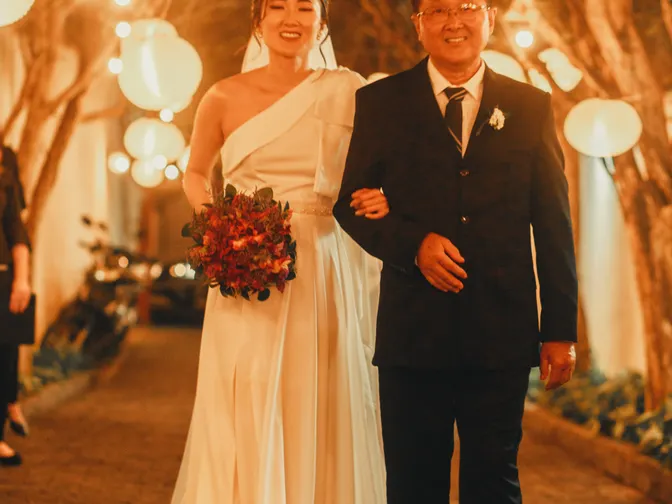
The classic British etiquette books split the bill like this. The bride's family paid for the big things: the reception, the dress, the flowers, the photography, the cars and the stationery. The groom's side covered the ceremony fees, the rings, the buttonholes, gifts for the wedding party, and the honeymoon. Guests paid for nothing except their hats.
That list was written for a world where couples married young, from their parents' homes, before they had savings or a mortgage between them. It made sense then. It makes very little sense for two people in their thirties who have lived together for six years and own a sofa they argued about in a way that felt distinctly marital already. Treat the traditional list as a museum piece: interesting, occasionally useful, not binding.
So who actually pays now?
In most weddings I have planned over the last decade, the couple paid for the majority of the day themselves, and one or both families added a contribution. The splits vary endlessly, but three patterns come up again and again, and they all work.
Some families give a fixed amount, early, with no notes attached. This is the gold standard, and if your parents do it, tell them so. Some prefer to pay for a specific thing: a mother who wants to buy the dress, parents who take the caterer's bill, an aunt who quietly covers the cake. Attaching a contribution to a real thing feels good for everyone, because the person giving can point at something on the day and know they made it happen. And some families simply cannot contribute, which changes nothing about the wedding except the number at the top of the budget, and needs exactly zero apology from anyone.
Contributions, and the strings that come attached
If you are hoping for family help, ask early and ask plainly, before you book anything. Not because it is polite, although it is, but because a budget can only be built from real numbers. "We'll see you right" is warmth, not money. The kindest question I know is: "we are setting our budget this month, is contributing something you would like to do?" It gives an easy yes, an easy no, and a reason to name an amount now.
Then the harder part. Money can arrive with opinions riding along, and you need to decide together, before the first cheque, what a contribution buys a say in. My honest rule after ten years: a contribution buys gratitude, a lovely day, and consultation on the thing it paid for. It does not buy a vote on the guest list, and it is worth knowing that the guest list is precisely where the opinions will aim first. If a cheque arrives with three names attached to it, you are allowed to have the guest list conversation on your own terms. Better an awkward five minutes in the beginning than a wedding you attended as guests of the sponsors.
Who pays for the wedding party?

This is the corner of wedding money with the most quiet resentment in it, so let me be unusually firm. If you choose it, you pay for it. You picked the bridesmaid dresses, so they are your cost, not a bill your friends pay for the privilege of standing next to you. Same for groomsmen: if the suits are hired to match, the hire is yours. Where people spend their own money on your wedding, give them the choice you would want: a colour and a budget, and let them find something they will wear again.
The hen and stag work the other way round. Everyone attending pays their own way and splits the honouree's share between them, and the organiser's real job is keeping the plan affordable enough that nobody has to choose between the weekend and the wedding. A three-day trip abroad is not a right. It is a big ask of people who are already buying outfits, travel and a gift, so someone should say the price out loud before anything is booked.
Who pays for what, at a glance
- Venue, food and drink: the couple, topped up by whatever the families genuinely offer.
- Outfits: each of you buys your own, unless a parent asks for the joy of buying it. Let them.
- Bridesmaid dresses and groomsmen suits: the couple, because the couple chose them.
- Hen and stag: attendees pay their own way and split the honouree's share.
- Rings: traditionally each buys the other's. In practice one shared pot, and nobody checks.
- Honeymoon: the couple, though it is the most popular thing for guests to contribute to instead of gifts.
Whoever pays, keep it where you both can see it
However your version shakes out, the arithmetic only stays friendly if it is visible. Contributions land months apart, deposits leave in dribs, and "wait, did your mum's dress money come through?" is not a conversation you want in the car outside the florist. Keep every contribution, cost and due date in one place you both can see. The budget tracker in our free wedding planner was built for exactly this, family money included, and setting it up takes a couple of minutes. Then send the thank-you notes early. The people who help pay for a wedding remember how it felt to be thanked far longer than they remember the amount.
Who-pays questions couples actually ask
Do the bride's parents still pay for the wedding?
Sometimes, but it is no longer the default and nobody should assume it. Most couples now fund the bulk of the day themselves, with contributions from one or both families where they can afford it. If parents offer to pay for everything, accept with gratitude and agree early what they would like a say in, because that conversation is far easier before the money moves.
What does the groom's family traditionally pay for?
The old list gave the groom's side the ceremony fees, the rings, buttonholes, gifts for the wedding party and the honeymoon. Modern practice is simpler: both families contribute what they can, to whatever the couple most needs, and the his-side-hers-side accounting has quietly disappeared. If the groom's parents want a traditional anchor, the drinks bill or the honeymoon are the usual modern picks.
Who pays for bridesmaid dresses and groomsmen outfits?
If the couple chooses the outfits, the couple pays for them. That is the fairest rule and increasingly the expected one in the UK. The alternative, asking each person to buy a dress in your colour and budget that they will genuinely wear again, is also fine, as long as the choice is really theirs. What sours friendships is choosing the dress and sending the invoice.
Who pays for the hen do and the stag do?
Everyone attending pays their own share and splits the cost of the person being celebrated between them. The bride or groom pays nothing. The organiser's duty is to set a budget the whole group can manage before booking anything, because guests are already paying for travel, outfits and a gift, and a lavish weekend that prices out a best friend is a bad trade.
Should parents who contribute get a say in the wedding?
A say on the thing they paid for, yes: if they covered the caterer, involve them in the menu tasting and mean it. A vote on the whole wedding, no. Agree the boundary kindly and early, ideally when the offer is made. Most parents genuinely just want to help, and the ones testing whether money buys influence are exactly the ones the early conversation is for.
Start your plan, free
Add your date and watch the countdown begin. The checklist, budget and guest list are waiting.
Create your free accountPhoto by Jonathan Nenemann via Pexels. Additional images via Pexels.
← Back to The Planning Notes